
Cedros Island Calico Bass & Yellowtail Fishing — The Ultimate Species Guide
If you’ve been researching cedros island calico bass fishing or chasing trophy yellowtail along the Pacific coast, you already know the name. Cedros Island is considered the Yellowtail Capital of the World — and for serious SoCal anglers, it’s the bucket-list trip that lives up to every story you’ve ever heard.
This guide breaks down exactly what you can expect when you fish Cedros Island with Toro — the species, the techniques, the gear, and why the fishing here is unlike anything available north of the border.
Why Cedros Island Is Called the Yellowtail Capital of the World
Cedros Island sits approximately 60 miles off the coast of Baja California in the Pacific Ocean, where cold nutrient-rich currents from the north collide with warmer southern water. That convergence creates a massive bait ecosystem — and where there’s bait, there are yellowtail. A lot of them.
Since the island was designated a Mexican Biosphere Reserve in 2016, commercial fishing pressure has been strictly managed. The result: fish populations that are dense, healthy, and largely untouched by the constant pressure that has degraded fishing in Southern California over the decades.
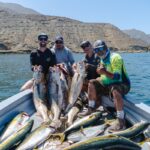
Yellowtail at Cedros aren’t the same fish you’re used to catching on a half-day boat out of San Diego. The average fish runs 15–25 lbs. Fish over 30 lbs are common. 40-lb class fish are caught regularly. It’s not just the size — it’s the volume. On a good day at Cedros Island, limits happen before noon.
Yellowtail Fishing at Cedros Island — Techniques That Work
Surface Iron
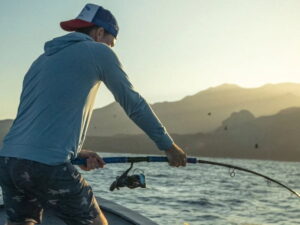
Surface iron is the signature Cedros Island technique and the reason the island attracts the most dedicated SoCal anglers. When yellowtail are pushing bait on the surface, you cast a heavy iron jig — Tady 45, Salas 6X, or JRI — into the melee and hang on.
There’s nothing like it in saltwater fishing. You see the fish, you make the cast, and within seconds of the retrieve you’re bent. The Cedros bite can be so aggressive that multiple anglers on the same panga are hooked up simultaneously.
Best conditions for surface iron: calm mornings, visible bird schools over bait, fish boiling on the surface.
Yo-Yo Iron
When yellows aren’t on the surface, yo-yo iron gets them. Drop a heavy jig to the bottom and crank it back up as fast as you can turn the handle. The erratic, rising action triggers reaction strikes from fish that won’t commit to surface presentations.
This is the technique that separates anglers who always catch fish from those who have slow days. When the surface bite dies, the yo-yo bite keeps the rods bent.
Live Bait — Toro’s Exclusive Advantage
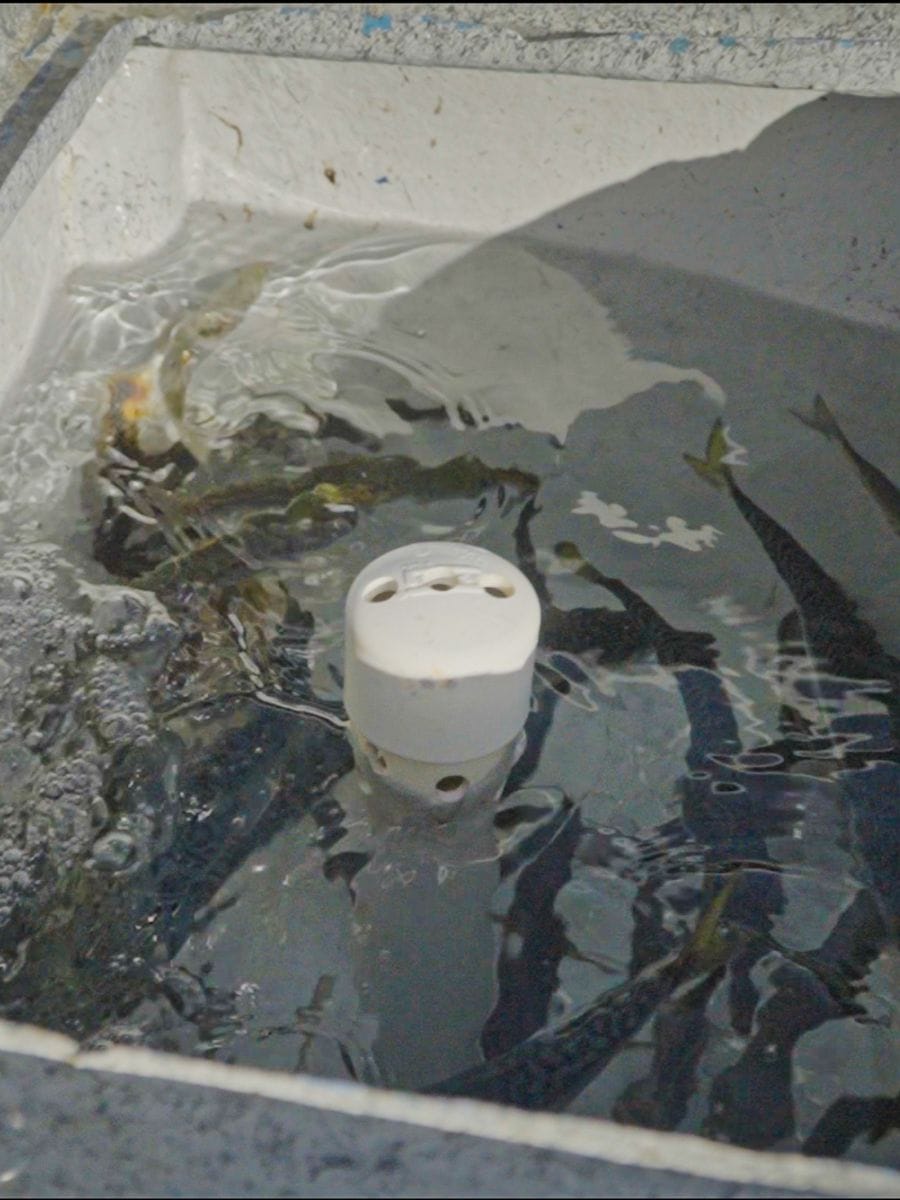
Here’s where fishing with Toro is different from every other operation on Cedros Island: Toro is the only operator with a live bait barge.
Live mackerel slow-trolled on heavy gear is one of the most effective yellowtail techniques at Cedros — and it’s only available when you have access to live bait. Toro’s bait barge stocks fresh live bait for every trip, at no extra charge. No other operation on the island offers this.
When the iron bite slows and the live bait comes out, the fishing changes entirely. Yellowtail that were ignoring everything suddenly can’t resist a live mackerel swimming past their face.
Trolling Rapalas and Swim Plugs
On tougher days when the school isn’t cooperating with either iron or bait, the captains pull deep-diving Rapalas and large swim plugs. This technique covers water and triggers reaction strikes from fish that are in a neutral feeding mood. It’s not as exciting as surface iron, but it produces fish when nothing else is working.
Calico Bass Fishing at Cedros Island — Trophy Fishing Unlike Anywhere in SoCal
If yellowtail is the main event at Cedros Island, calico bass fishing here is the secret that keeps serious bass anglers coming back every year.
In Southern California, a 7-lb calico is a fish you remember for years. At Cedros Island, a 7-lb calico is an average fish. The reason: the island’s kelp forests and boiler rocks hold an essentially untouched population of resident bass that have never experienced significant fishing pressure. These fish are aggressive, they’re big, and they’re everywhere.
Boiler Rock Fishing
The most exciting calico bass fishing at Cedros happens around the island’s boiler rocks — massive rocky outcroppings where waves surge and foam in the shallows. The bass hold tight to the structure, using the surge and current to ambush baitfish.
Your captain positions the panga just outside the foamline. You cast soft plastics or hardbaits directly into the whitewater and work them back with varying speeds. The bites are violent and visual — you’ll see the fish dart out of the rocks to crush your lure.
Best setup for boiler rocks: 5-inch paddletail swimbait in red/brown or natural colors on a 1-oz weedless leadhead. Heavy braid — 65-80lb — with a short 40-50lb fluorocarbon leader. These fish are strong and they know how to get back into the rocks.
Kelp Bed Fishing
The kelp forests surrounding Cedros Island are dense and healthy — exactly the kind of habitat that produces the biggest calicos. Fish the up-current edge of the kelp where bass post up to ambush prey.
When current pushes the kelp fronds below the surface, you can work lures over the top of the strands — one of the most visually exciting presentations in saltwater bass fishing. Hardbaits like the Daiwa SP Minnow excel here, triggering reaction strikes from fish that are actively feeding.
Halibut in the Mix
While you’re working the sandy areas adjacent to the kelp and rocks, keep a separate setup rigged for halibut. Cedros halibut are caught in shallow water — 20 feet or less — on the same swimbaits you’re using for calico. When you see a piece of the bottom “lift up” and follow your bait, you’ve found one. Drop it back down, tease it, and it’ll commit.
White Seabass, Tuna & What Else Is in the Water
Yellowtail and calico bass are the primary targets, but Cedros Island produces a genuine mixed bag depending on the season:
- White Seabass — Spring and fall. Often caught while targeting calico bass along sandy beaches and kelp edges. One of the most prized Pacific coast species.
- Bluefin & Yellowfin Tuna — Summer (June–September). When warm blue water pushes up, tuna move into range. Cedros tuna fishing is world-class during peak months.
- Halibut — Year-round in shallow water. A bonus species on virtually every trip.
- Sheephead — Common in and around the same boiler rocks as calico bass.
- Dorado (Mahi-Mahi) — Summer. Caught around floating kelp paddies offshore.
→ See the full seasonal breakdown: Best Time to Fish Cedros Island →
What Gear to Bring for Cedros Island Fishing
You don’t need to bring everything — rods, reels, tackle, and live bait are all provided. But if you have personal gear preferences, here’s what the most productive setups look like at Cedros:
Yellowtail / Surface Iron Setup
- Rod: 7–8 ft medium-heavy conventional or spinning, fast action
- Reel: conventional rated for 40–60lb, high retrieve speed
- Line: 50–65lb braid
- Leader: 40–60lb fluorocarbon, 4–6 ft
- Lures: Tady 45 (mint, blue/white, scrambled egg), Salas 6X, JRI 4
Calico Bass Setup
- Rod: 7–7.5 ft medium-heavy with softer tip
- Reel: conventional or baitcaster, 300 size
- Line: 65–80lb braid
- Leader: 40–50lb fluorocarbon, keep it short (2–3 ft)
- Lures: 5-inch paddletail swimbaits (red/brown, natural), Daiwa SP Minnow
Live Bait Setup
- Heavy conventional, 50–80lb braid
- Large circle hook, 7/0–9/0
- 60–80lb fluorocarbon leader
- Hook the mackerel through the nose or collar for maximum swim action
Toro’s Live Bait Barge — The Only One on Cedros Island
It’s worth saying again because it matters that much: Toro is the only operator on Cedros Island with a live bait barge.
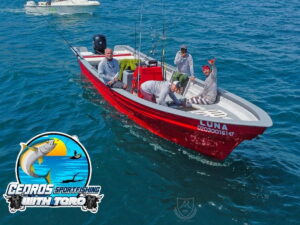
Every other operation on the island is limited to cut bait or must use whatever bait is available from other sources. With Toro, fresh live mackerel is loaded onto the panga every morning before you leave the dock. It’s included with every package, no upcharge, no exceptions.
For yellowtail fishing in particular, live bait is the single biggest advantage you can have on a slow bite day. It’s the difference between a limit and a slow day. It’s also why return clients book with Toro year after year.
→ See everything included in your trip: What Your Trip Includes →
Frequently Asked Questions
Is Cedros Island really the best place to fish for calico bass?
For trophy-sized calico bass, yes — it’s one of the top destinations in the Pacific. The untouched resident population and ideal kelp/rock habitat produce fish that dwarf anything consistently available in Southern California. 7–8 lb calicos are common. Fish over 10 lbs are caught regularly.
What is the best time of year for yellowtail at Cedros Island?
Yellowtail are present year-round at Cedros Island. Peak seasons are winter (December–February) for the largest fish, and fall (September–November) for the best combination of size and volume. Summer also produces strong yellowtail action alongside tuna.
What size yellowtail can I expect at Cedros Island?
The average yellowtail runs 15–25 lbs. Fish in the 30–40 lb class are caught regularly. Cedros Island consistently produces larger fish than most SoCal destinations due to limited fishing pressure and the island’s exceptional bait ecosystem.
Do I need to bring my own fishing gear to Cedros Island?
No — rods, reels, tackle, and live bait are all provided as part of every package. You’re welcome to bring personal gear if you have specific preferences, but it’s not required.
What makes Toro’s operation different from other charters on Cedros Island?
Three things: the only live bait barge on the island, a true all-inclusive package with no hidden charges, and small group sizes (2–3 anglers per panga) that give every angler personalized attention from experienced local captains who know every productive spot on the island.
Ready to Fish the Yellowtail Capital of the World?
Cedros Island is everything the stories say it is. The fish are big, the action is real, and Toro’s operation gives you every advantage possible — including the only live bait barge on the island.
2026 dates are open now. Peak season fills fast.
→ View Packages & Book Your Trip →
Questions? Message Toro directly on WhatsApp.



 EN
EN  ES
ES